Why your best ideas
never reach you.
The most valuable thinking in your organisation is often the quietest – and a specific, fixable dynamic keeps it that way.

The most valuable thinking in your organisation is often the quietest – and a specific, fixable dynamic keeps it that way.
Have you ever held back something you wanted to say, because you could already predict the reaction you’d get?

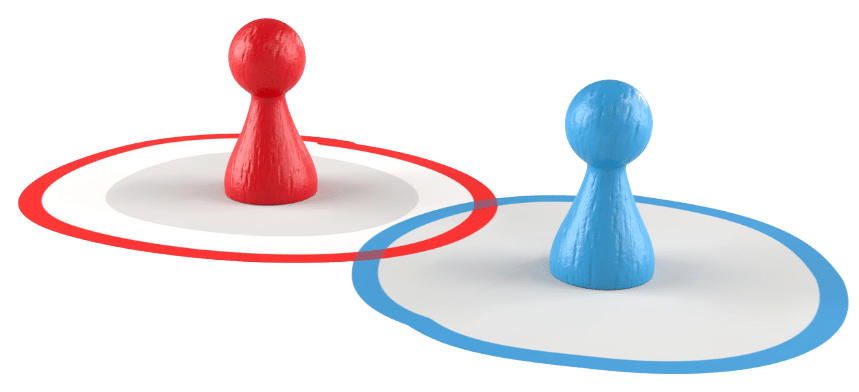
The Red-Liner Model identifies the mechanism behind these patterns, explains why they resist normal approaches, and gives teams a practical method for changing the dynamic.
It has been developed over ten years of research and application, and consistently produces something participants describe as rare: A framework for something they’ve experienced for years but never been able to articulate.

A team that should be producing more than it does. A brainstorm where the same safe ideas keep coming up. A talented person who’s become noticeably quieter over the past year. Someone who left saying ‘fit’ was the issue but whose real reasons you never quite got to.
You’ve looked at culture, process and communication. The problem persists.
In most cases like this, the cause isn’t strategic or structural. It’s interpersonal and it’s specific to certain relationships. A small number of people in any team have a subtle, unconscious tendency to slightly overestimate their own knowledge or judgement. Among other things, they tend to dismiss others’ contributions too quickly or overrule them.
The Red-Liner Model identifies the mechanism behind these patterns, explains why they resist normal approaches, and gives teams a practical method for changing the dynamic.
It has been developed over ten years of research and application, and consistently produces something participants describe as rare: A framework for something they’ve experienced for years but never been able to articulate.