Mastodon

Some of your best people are
going quiet – Here is why

In most teams, one or two people are subtly suppressing the ideas, confidence and performance of everyone around them – without knowing they’re doing it, and without anything that ever gets reported.

The problem you can see but can’t quite explain.

Your engagement initiatives are working. Your culture is genuinely good. And yet certain teams keep underperforming. Certain people unexpectedly leave. Certain brainstorms produce the same safe ideas. Certain brilliant hires go strangely quiet after six months.

You’ve looked at strategy. You’ve looked at process. You’ve looked at communication.

The problem isn’t any of those things.

    In every organisation, a small number of people (typically one or two in any team) have a persistent, unconscious tendency to slightly overestimate their own knowledge or judgement. They believe they already understand before others have finished speaking. They dismiss ideas a little too quickly. They react to feedback or challenge with a level of emotion that subtly trains the people around them not to try again.

    They are not bad people. They are usually high performers by conventional measures. And they are almost certainly unaware of the effect they have.
    But the effect is real – and it compounds quietly over months and years.

    What it actually costs.

    The cost is not recorded anywhere, because none of it is serious enough to report.

    It is the idea that stayed in someone’s head because the last time they floated an idea, it wasn’t received well. It is the meeting where the best thinking in the room never reached the table. It is the person who updated their CV after their third conversation with a manager who never quite listened.

    It shows up eventually as flat engagement scores that don’t move despite repeated initiatives, as innovation processes that generate activity but not output, as talented people who leave citing “fit” and whose exit interview doesn’t capture what actually happened.

    The problem is most acute for two groups: people with genuinely new ideas who need a psychologically safe environment to develop them, and neurodivergent employees, who are disproportionately creative and disproportionately sensitive to dismissive environments.

    Why the usual approaches don’t fix it.

    If you’ve tried addressing this through coaching, feedback, or communication training, you may have noticed that the results are temporary or partial.
    There’s a reason for that.

    The same quality that creates the problem – a well-practised resistance to outside input – also makes the person resistant to coaching. They hear the feedback. They may moderate their behaviour while they sense scrutiny. And then, gradually, the pattern returns.

    The more effective intervention is different. When the people around the pattern understand it – its mechanism, its predictable evolution, the specific responses that narrow it – they can change the dynamic without waiting for the person at the centre to change first.

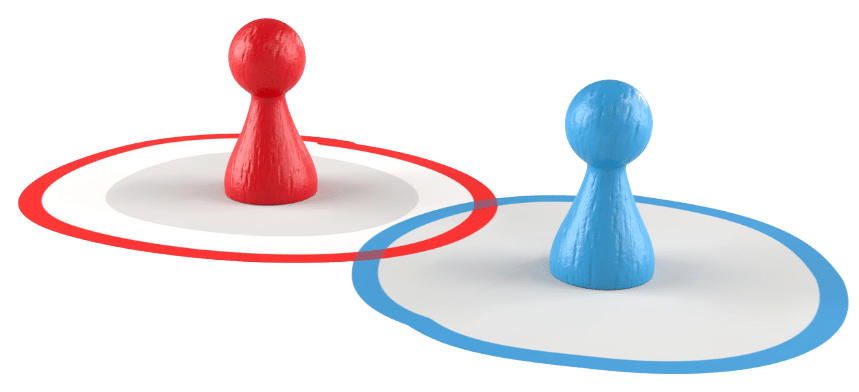
    The Red Liner Model.

    [Brief intro to the model – see USP page for full detail]
    The Red Liner Model is a framework developed from fifteen years of research and practice. It provides a structural explanation for why certain people behave as they do, why they are resistant to normal social feedback, and what actually works in changing the dynamic around them.

    It also explains – and this is where most participants describe an “Aha” moment – why things appear to get worse before they get better when you start to address the pattern correctly. Without this understanding, people conclude they’ve chosen the wrong path and stop. With it, they recognise the temporary intensification as evidence that the approach is working.

    What changes.

    Teams that apply the Red Liner Model report:

    • Ideas reaching discussion that would previously have been filtered before being voiced
    • Measurable improvement in psychological safety within specific teams
    • Significantly increased confidence in people who had previously gone quiet
    • Reduced time spent by senior leaders managing the same conflicts
    • Better retention of high performers who had previously cited culture as their reason for leaving

    These are not soft outcomes. They have direct implications for innovation performance, talent costs and delivery.

    If this dynamic feels familiar (and for most senior leaders it will) the place to start is the Red Liner Model overview, or a free 90-minute Discovery Workshop where you can examine how the pattern operates and what the response looks like in practice.