


Understanding Why Escalations Persist
Many workplace problems do not begin with a major incident.
They develop gradually and continue despite feedback, policy, or intervention.
Left unaddressed, these dynamics consume leadership time, erode trust, and quietly destabilise teams.
The Red Liner Model (RLM©) explains why.
It identifies recurring behavioural patterns that adapt over time, remain
difficult to categorise, and often intensify when addressed inconsistently.
This is not a personality theory. It is a structural explanation of why
certain dynamics persist and how organisations can respond effectively.
–
A Pattern, Not a Personality
The RLM describes relational patterns in which someone:
- Tests boundaries to see what holds
- Adjusts tactics when challenged
- Uses dismissal, interruption, emotional pressure, or positional authority to regain influence
These behaviours are often subtle.
They rarely appear extreme enough to trigger formal action.
The model is descriptive, not moral and it’s not about assigning blame. It exists to inform proportionate and consistent responses.

–



The shift is not immediate – but it is predictable.
Why “Doing the Right Thing” Often Feels Ineffective
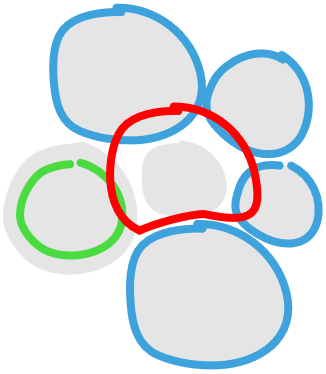
When one behavioural route is blocked, another is often tried.
If only some “doors” are closed, the pattern adapts rather than stops.
This is why initial attempts to set boundaries can feel ineffective or even appear to make things temporarily worse.
Without a clear understanding of the full pattern, responses tend to be partial.
Partial responses prolong the dynamic.
–
The Patterns Are Selective
These dynamics are rarely universal.
They appear in some relationships and disappear in others.
They may target specific roles, personalities, or perceived vulnerabilities.
This selectivity makes them difficult to categorise.
They are often misinterpreted as communication style differences or personality clashes.
Without a shared framework, teams struggle to see clearly what is happening and respond consistently.
–

From Insight to Organisational Stability
When the pattern is understood, responses become deliberate.
The Boundary-Led Response Method enables leaders and teams to:
- Detect emerging dynamics early
- Respond proportionally in live situations
- Maintain consistency as tactics shift
- Recognise when escalation is transitional – not terminal
Escalation is not viewed as failure, but as a phase in disrupting a recurring pattern.
Over time, consistent responses narrow behavioural pathways, reduce volatility, and stabilise relationships.
Persistent dynamics are interrupted through clarity and consistency not force.
Explore the Full Analysis
If recurring workplace tensions feel familiar, the next step is not more policy or earlier escalation.
It is understanding how adaptive behavioural patterns operate and how to interrupt them before they become entrenched.
Explore the executive summary, access the full white paper, or schedule a discovery workshop to examine how the Red Liner Model applies in your organisation.
–